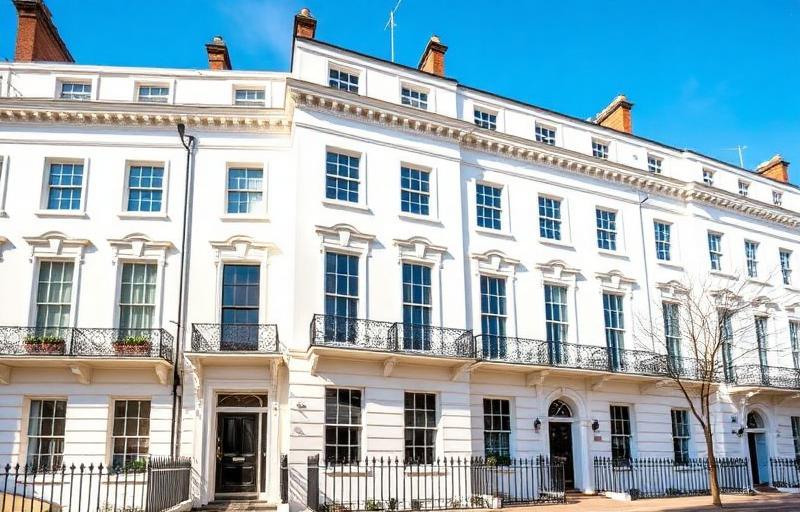
Navigating the complexities of a property renovation in London is a significant undertaking, particularly when you are looking to unlock value in premium postcodes like Mayfair, Knightsbridge, or Chelsea. A loft conversion is widely regarded as one of the most effective ways to increase both the square footage and the market value of your home. In fact, research from Nationwide suggests that a well-executed loft conversion can add up to 20% to the value of a London property.
However, the regulatory landscape in Central and South London is uniquely challenging. From the strict conservation area rules of Greenwich to the structural demands of historic Victorian terraces in Kensington, understanding the legalities is the first step toward a successful build. At coreMaint, we specialise in high-end property maintenance and renovations, and we understand that "compliance" is just as important as "craftsmanship."
This guide breaks down everything you need to know about loft conversion regulations in London, ensuring your project is legal, safe, and built to the highest standards.
1. Planning Permission vs. Permitted Development
The first question every London homeowner asks is: "Do I need planning permission?" The answer depends largely on your location and the scope of your design.
Understanding Permitted Development (PD) Rights
Many loft conversions fall under 'Permitted Development' (PD), meaning you don’t need formal planning permission if your project fits specific criteria. Under PD, you can generally add up to 40 cubic metres of space to a terraced house or 50 cubic metres to a semi-detached or detached house.
However, PD rights are often restricted in London. If you live in a Conservation Area (common in parts of Greenwich and Chelsea) or a Listed Building, your PD rights may be removed or severely limited via an Article 4 Direction. In these cases, full planning permission is almost always required.
When Planning Permission is Mandatory
You will likely need to submit a full planning application to your local council (such as the Royal Borough of Kensington and Chelsea or Westminster City Council) if:
- You are extending beyond the limits of PD (e.g., adding a large Mansard extension).
- The property is a flat or a maisonette (PD rights generally only apply to houses).
- The extension exceeds the highest part of the existing roof.
- You are using materials that do not match the existing appearance of the house.
If you are unsure where your project sits, it is always wise to Contact Us for a professional assessment of your property’s potential.
2. Navigating Building Regulations
While planning permission deals with the appearance of your home, Building Regulations deal with safety and performance. Regardless of whether you need planning permission, every loft conversion in London must comply with Building Regulations.
Structural Integrity
A loft conversion adds significant weight to your property. London’s historic properties, particularly those in areas like Knightsbridge, often require structural steel beams (RSJs) to support the new floor and roof load. A structural engineer must calculate these requirements to ensure the original walls can handle the pressure.
Fire Safety Regulations
Fire safety is non-negotiable. When converting a loft, you effectively turn a two-story home into a three-story home. This triggers several requirements:
- Fire Doors: All doors leading to the protected stairwell must be fire-rated (usually FD30).
- Mains-Powered Smoke Alarms: These must be interlinked across every floor.
- Fire Resistance: The new floor joists must offer at least 30 minutes of fire resistance.
- Escape Routes: You must ensure there is a safe path of travel from the new loft room to the outside of the building.
Thermal Efficiency (Part L)
In line with London’s sustainability goals, new loft conversions must meet strict "U-values" for insulation. This ensures your home stays warm in the winter and cool in the summer, reducing energy bills. This involves high-quality insulation in the rafters, walls, and floors, as well as high-performance double or triple glazing for dormer windows and roof lights.
3. The Party Wall Act 1996
In the densely packed streets of Central and South London, your roof is likely connected to your neighbor's roof. This means the Party Wall Act is a critical part of your conversion process.
If you are inserting steel beams into a shared wall, cutting into it, or altering the height of the party wall, you must legally notify your neighbors.
Steps to Party Wall Compliance:
- Serve Notice: You should serve a formal Party Wall Notice at least two months before work begins.
- Neighbor’s Consent: If your neighbor provides written consent, you can proceed.
- Party Wall Award: If they dissent (or don't respond), you must appoint a Party Wall Surveyor to draft an "Award." This document outlines how the work will be carried out to protect both properties.
Failing to follow these steps can result in an injunction, halting your project immediately and leading to significant legal costs.
4. Practical Tips for a Successful London Conversion
London properties present unique challenges, such as restricted access for materials and high expectations for finish quality. Here is some actionable advice from our coreMaint experts:
Respect the London Aesthetic
In areas like Mayfair and Kensington, the aesthetic harmony of the street is paramount. For period properties, a Mansard conversion is often the preferred choice by local planners. It is more expensive than a simple Rear Dormer, but it offers a more seamless integration with the existing roofline and is more likely to be approved in sensitive areas.
Prioritize Headroom
To be considered a functional living space, you generally need a minimum head height of 2.2 metres across at least half of the floor area. If your loft is too shallow, you may need to "lower the ceilings" of the floor below—a complex structural task that coreMaint can facilitate, but one that adds to the budget and timeline.
Consider the Integration of Services
A premium loft conversion isn't just a room; it’s an ecosystem. Think about:
- Water Pressure: Adding a new ensuite in the loft? You may need to upgrade your boiler or install a Megaflow system to ensure there is enough water pressure at the top of the house.
- Smart Home Tech: While the walls are open, it is the perfect time to install hardwired internet (Cat6) and smart lighting systems.
Don't Forget the "Lawful Development Certificate"
Even if your project falls under Permitted Development, we strongly recommend obtaining a Lawful Development Certificate (LDC). This document proves to future buyers and solicitors that your conversion was legal at the time of construction, making the sale of your property in competitive London markets much smoother.
Transform Your Home with coreMaint
A loft conversion is a sophisticated investment that requires more than just a builder; it requires a partner who understands the nuances of London’s premium property market. From managing building control inspections to ensuring the final paint stroke is flawless, coreMaint provides a holistic approach to property maintenance and renovation.
Our team has extensive experience working in the Royal Borough of Kensington and Chelsea, the City of Westminster, and the London Borough of Greenwich. We pride ourselves on transparency, technical excellence, and a "client-first" mentality that takes the stress out of home improvement.
Don't leave your property’s potential to chance. Ensure your loft conversion is fully compliant, beautifully designed, and built to last.
Ready to start your journey?
Get a Free Quote today to discuss your project requirements with one of our London experts, or Contact Us for more information on our full suite of premium maintenance services. Whether you are in a Chelsea townhouse or a Greenwich terrace, coreMaint is here to elevate your living space.